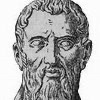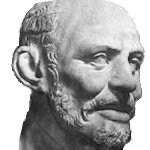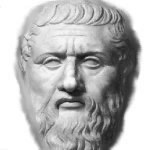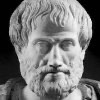
Pre-Socratic Philosophers (Before Socrates)
Thales (c.624-546 BCE
Milesian school


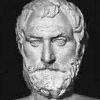
Thales is usually considered to be the first philosopher as well as ‘the father of science’ as he was the first to try to explain things in nature without relying on mythology. He was the first of three major figures in the Milesian school, all of whom felt that one single substance was the source of all things. According to Thales, that one subtance was water.
Anaximander (c.610-546 BCE) Milesian school
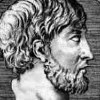
Anaximander was a student of Thales and the second major figure in the Milesian school. He believed that the single substance that was the source of all things was an endless, unlimited substance called apeiron.

Anaximenes (c.585-528 BCE) Milesian school
Anaximenes was a student of Anaximander and the third major figure in the Milesian school. He believed that air was the single substance that was the source of all things.

Pythagoras (570-495 BCE) Pythagorianism
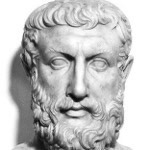
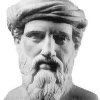
Although little is known of the historical figure, Pythagoras is considered to be the founder of the mystical/religious movement that bears his name. He made important contributions to the field of mathematics, the most famous of which is the Pythagorean theorem. He also believed in reincarnation.

Parmenides (c. early 500’s BCE) Eleatic school
The founder of the Eleatic school, Parmenides believed that all is one, that everything that exists has always existed, and that nothing ever really changes. He felt that this conclusion, based on reason alone, was correct and that our senses, which tell us otherwise, are ultimately unreliable.
Heraclitus (c.535-475 BCE) Ephesian school
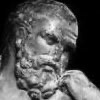
Unlike Parmenides, Heraclitus believed that everything is in a constant state of change and that are sense are generally reliable. A melancholy and obscure man, he is often portrayed as the “weeping philosopher”.

Zeno of Elea
(c.490-430 BCE) Eleatic school
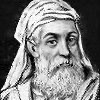

A student of Parmenides, Zeno is most famous for his paradoxes, the most famous of which is known as Achilles and the tortoise.

Empedocles (c.490-430 BCE) Pluralist school
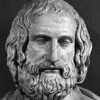
Empedocles introduced the concept of four fundamental elements (fire, air, earth & water), instead of just one — an idea that persisted until modern times.

Anaxagoras
(c.500-428 BCE) Pluralist school
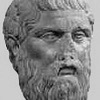

Anaxagoras, a member of the pluralist school, was the first to bring philosophy to Athens, where it later flourished in the hands of Socrates, Plato and Aristotle.
Protagoras
(c.490-420 BCE) Sophist
Protagoras was one of the first sophists — ‘practical’ philosophers who taught the wealthy for money. He is most famous for his saying, “Man is the measure of all things“.

Democritus
(c.460-370 BCE) Atomist school
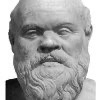
Democritus, together with his teacher Leucippus, is usually credited with developing atomism — the idea that everything in nature is made up of indivisible elements called atoms. This theory reconciled Parmenides’ concept of nothing changing (because the atoms themselves don’t change) with Heraclitus’ idea of constant change (because it is the way in which the atoms are arranged that change.
Socrates and later

Socrates
(c.469-399 BCE) Athens

Socrates is remembered more for how he taught than for what he taught. He liked to appear ignorant and ask a lot of questions, thus helping people to find answers on their own — a technique that became known as the Socratic Method. He is also remembered for his death. Accused of corrupting youth and disbelieving in the gods, he was sentenced to commit suicide by drinking poison. Socrates left behind no writings and everything we know about him is based on what Plato and his other students wrote. Socrates: A Very Short Introduction

Plato (428-327 BCE) Athens

A student of Socrates, Plato founded The Academy in Athens and became one of the greatest figures in the entire history of philosophy. He believed in the existence of ideal forms, residing beyond the physical world and known by reason alone, upon which our world of senses is based. He expressed this theory most clearly in his famous piece “The Myth of the Cave“. Plato: A Very Short Introduction. MORE
Aristotle (c.384-322 BCE) Athens
A student of Plato, Aristotle is perhaps the most influential of all the ancient Greek philosophers. He is famous for his empirical approach to studying nature, his theory of Four Causes (material, formal, efficient and final), and his development of formal logic. He was also a tutor for Alexander the Great. MORE

Aristippus (c.435-356 BCE) Cyrenaicism
Aristippus was the founder of Cyrenaicism, an ultra-hedonist philosophy that encouraged people to get as much pleasure as possible out of life.

Diogenes (c.412-323 BCE) Cynicism

Diogenes was one of the founders of Cynicism, a philosophy that, in opposition to Cyrenaicism, rejected the desire for wealth and luxury and encouraged a simple life, free from possessions, instead. Diogenes is remembered for his theatrics such as walking around with a lamp during the day proclaiming that he was looking for an honest man and for responding to Alexander the Great’s question, “What can I do for you?” with “Move, because you’re blocking my sun.”

Pyrrho (c.360-270 BCE) Skepticism

Pyrrho was an ultimate skeptic in that he believed it was impossible to actually know anything for certain. He therefore recommended that people suspend judgment on philosophical matters and simply focus on more practical matters instead.

(c.341-270 BCE) Epicureanism


Influenced by Cyrenaicism, Epicurus saw pleasure and pain as the measures of good and evil. Epicureans therefore tried their best to enjoy life by aiming for as much happiness and as little suffering as possible.

Zeno of Citium (c.334-262 BCE) Stoicism
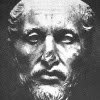
Zeno was the founder of Stoicism, a philosophy that developed out of Cynicism and encourages people to use their free will to repress emotions and simply be at peace with whatever nature throws their way.

Plotinus (204-270 CE) Neoplatonism

Plotinus is considered the founder of Neoplatonism, a pantheistic and mystical philosophy that emphasizes how everything is really part of “the One” and that there really is no dualism (e.g. – darkness does not exist by itself; it is simply the absence of light).
MEDIEVAL PHILOSOPHERS

Augustine of Hippo (A.D. 354–430)

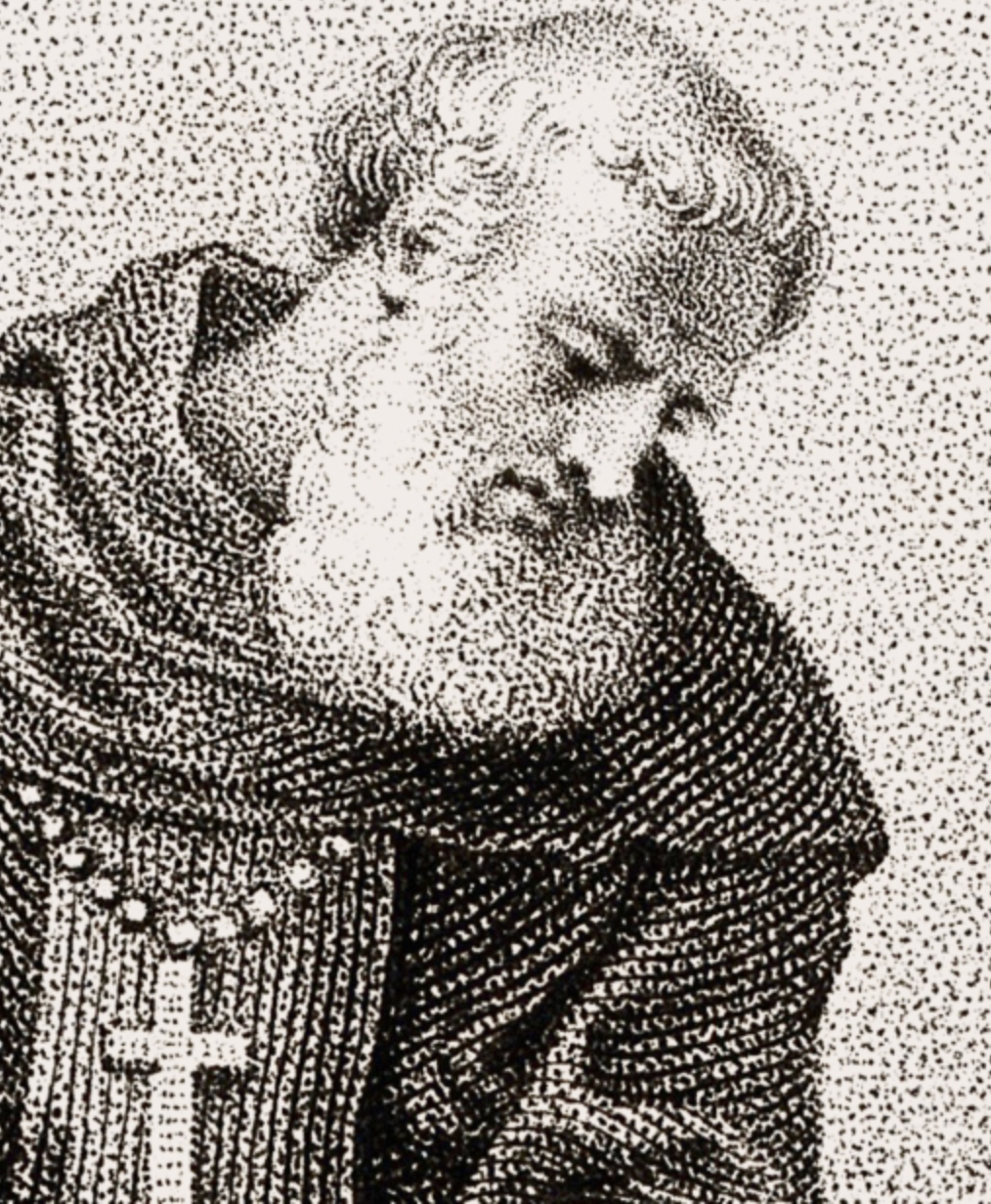
Augustine is one of the most influential theologians, philosophers, and Church Fathers in Western Christianity. He is widely known for his autobiography, Confessions, and his theological masterpiece, The City of God. He is celebrated as the "Doctor of Grace" because of his profound influence on the doctrines of original sin, salvation, and the concept of divine grace. His writings seamlessly adapted classical Greco-Roman thought (like Platonism) to Christian doctrine, laying the intellectual foundation for medieval and modern Western civilization. 

Thomas Aquinas (1224- 1274)

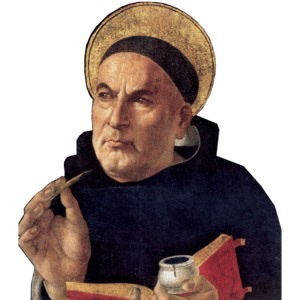
Thomas Aquinas is best known for synthesizing Christian theology with Aristotelian philosophy, using reason to explore faith. His monumental intellectual legacy includes the "Five Ways" (arguments for the existence of God) and his masterpiece, the Summa Theologiae.
17th CENTURY PHILOSOPHERS

Francis Bacon (1561-1626) English

Sir Francis Bacon advocated the use of inductive reasoning (as opposed to the deductive reasoning used by the rationalists of his day) and is hence known as the father of empiricism. He was also very influential in developing the modern scientific method. Sir Francis Bacon: The Fifty-Nine Essays

Thomas Hobbes (1588-1679) English

One of the earliest modern philosophers to hold a materialist worldview, Thomas Hobbes is primarily remembered for his contributions to political philosophy. He wrote Leviathan and argued for concepts such as individual freedoms, equality, and representative government. He also believed that humans are naturally anarchic and need a sovereign to rule over them. Note: The tiger in the comic Calvin & Hobbes is named after him. Leviathan

Rene Descartes (1596-1650) French

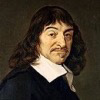
Rene Descartes is often called the father of modern philosophy. Together with Spinoza and Leibniz, he is considered one of the three great continental rationalists. He is also known for espousing a dualism. Descartes made many important contributions to the field of mathematics but is perhaps most famous for his saying “Cogito ergo sum” (Latin for “I think, therefore I am“). 

Baruch Spinoza (1632-1677) Dutch, of Jewish origin

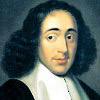
Baruch Spinoza rejected the mind-body dualism of Descartes and is often considered to have held a more pantheistic worldview, arguing that all things are ultimately one. He believed in an impersonal God and took a critical approach to the Bible and this led to his writings being strongly condemned by religious leaders.
Spinoza: A Very Short Introduction

John Locke (1632-1704) English
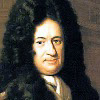
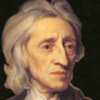
John Locke was the first of three great British empiricists (the other two being Berkeley and Hume). He is most famous for his idea of the “tabula rasa” (Latin for “blank slate”). Basically, he felt that we are all born with a mind that is like a blank sheet of paper. As we go through life, we have experiences (all of which come by way of our five senses) and that everything we know or think of is a product of these experiences. Known as the father of liberalism, he also advanced social contract theory but disagreed with Hobbes’ support of the absolute monarchy. 

Gottfried Leibniz (1646-1716) German

The last of the three great continental rationalists, Gottfried Leibniz believed that our world was the best possible world that God could have created. He is also remembered for his contributions to mathematic. He developed calculus independent of Newton and played a major role in the development of the binary number system and mechanical calculator. Leibniz: Philosophical Essays (Hackett Classics)

18th CENTURY PHILOSOPHERS

George Berkeley (1685-1753) Anglo-Irish

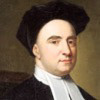
George Berkeley was an Anglican bishop and stands out because of his extreme idealism. He believed that our thoughts and sense perceptions are the only things that really exist. According to Berkeley, the material world is not really real — “we” are all actually just thoughts existing inside the mind of God!
Principles of Human Knowledge and Three Dialogues Between Hylas and Philonous (Penguin Classics)
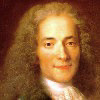
Voltaire (1694-1778) French
Voltaire was the pen name for Francois-Marie Arouet, one of the key figures of the Enlightenment era. His ideas on civil liberties and social reform helped pave the way for the French and American revolutions. As a deist, he focused more on understanding nature through the use of reason as opposed to making appeals to authorities such as the church. Candide

David Hume (1711-1776) Scottish

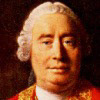
David Hume’s empiricism was materialist (as opposed to idealist, like Berkeley’s) in that he mostly focused on what can be directly observed and experienced in the material world. He believed that every idea in our mind can be traced to real things that we have experienced. For example, we might have an idea of an “angel” (without having ever experienced one) but that is simply a combination of the idea of a “man” and the idea of “wings”. Hume: A Very Short Introduction

Jean-Jacques Rousseau (1712-1778) Genevan
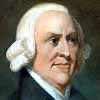
Jean-Jacques Rousseau was an important figure in the Romantic movement and made key contributions to educational and political theory. He believed in the innate goodness of humans (contra Hobbes) and felt that it was society that corrupts us. Rousseau: A Very Short Introduction

Adam Smith (1723-1790) Scottish

Adam Smith is considered the father of modern economics. He wrote The Wealth of Nations, in which he advocated the idea of free market economies. The Wealth of Nations

Immanuel Kant (1724-1804) German

Immanuel Kant is often considered to be the most important modern philosopher. This is because he built a bridge between rationalism and empiricism. He believed that all knowledge comes from the senses but is filtered through our rational minds. Therefore there is a difference between how things really are (the thing in itself) and how things are experienced by us (the thing for me). Kant: A Very Short Introduction

J.W. von Goethe (1749-1832) German

J. W. von Goethe is often remembered as being more of a literary great than a philosopher (his masterpiece being Faust), but in reality, he was both, and more. He is associated with Romanticism, a movement that put a greater emphasis on feeling in reaction to the over-emphasis on reason that was common during the Enlightenment. Faust
19th CENTURY PHILOSOPHERS

G. W. F. Hegel (1770-1831) German

G.W.F. Hegel was an idealist but not in the extreme like Berkeley. He is associated with the Hegelian dialectic — a method of dialogue that involves presenting a thesis, followed by an anti-thesis, and finally a synthesis. He was very influential both in terms of later thinkers who agreed with him (like Marx) as well as thinkers who developed new ideas in opposition to him (like Kierkegaard). Phenomenology of Spirit

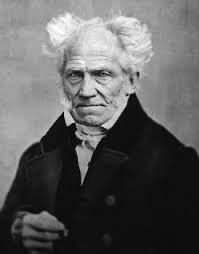
Arthur Schopenhauer (1788–1860)

Arthur Schopenhauer (1788–1860) was an influential German philosopher famous for his atheistic metaphysical system, philosophical pessimism, and early integration of Eastern thought into Western philosophy. His magnum opus, The World as Will and Representation, argued that the universe is governed by an irrational, insatiable "will to live" that causes inevitable human suffering

Auguste Comte French
(1798-1857) French
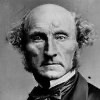
Auguste Comte is known as the founder of sociology and positivism, the latter being the view that the only authentic knowledge is that which we can experience and verify scientifically. Introduction to Positive Philosophy (Hackett Classics)

John Stuart Mill (1806-1873) British

John Stuart Mill was a proponent of utilitarianism (“the greatest happiness to the greatest number of people”) and made important contributions to liberal political philosophy and the philosophy of science. On Liberty

Soren Kierkegaard (1813-1855) Danish

Soren Kierkegaard is considered the father of existentialism, although his was a theistic existentialism as opposed to the more common atheistic existentialism of Nietzsche and Sartre. He believed that individuals were responsible for their own lives and espoused a passionate, irrational faith based on a leap in the dark. Kierkegaard: A Very Short Introduction

Henry David Thoreau (1817-1862) American
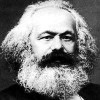
Henry David Thoreau was a key figure in American transcendentalism (which focused on an intuitive spirituality over traditional religious beliefs). He wrote Walden and was a proponent of simple living and civil disobedience. Walden

Karl Marx (1818-1883) German

Karl Marx wrote The Communist Manifesto with Friedrich Engels, which opens with the lines, “The history of all hitherto existing society is the history of class struggles” and thus laid the groundwork for modern communism and socialism. The Communist Manifesto

William James (1842-1910) American

William James is best known for supporting pragmatism (the belief that ideas are meaningful only if they “work”), his work on the psychology of religious experiences, and his will-to-believe doctrine (the idea that some truths must be accepted without evidence). He was the brother of Henry James, an important American writer. The Varieties of Religious Experience

Friedrich Nietzsche
(1844-1900)  German
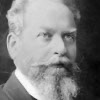
Friedrich Nietzsche is most famous for the statement, “God is dead.” which comes from a story he wrote about a madman who goes around a village shouting, “Where is God?” Finally, the madman answers his own question and says, “God is dead… and we have killed him.” Nietzsche was referring to the great change that had happened in Europe during the nineteenth century. Up to that point, the Christian God had been the foundation for morality and people’s purpose in life. However, science and secularism had grown to a point where many people felt God was no longer necessary. 

20th CENTURY PHILOSOPHERS

Edmund Husserl (1859-1938) German

Edmund Husserl founded the phenomenology movement, which sought to systematically determine the essential properties of consciousness by reflecting upon the subjective phenomena we experience.

Bertrand Russell (1872-1970) British

Bertrand Russell was one of the founders of analytical philosophy, a school of thought that uses scientific methods to solve philosophical problems and which tends to dominate in the US and UK in contrast to the existentialism and Marxism found in mainland Europe. One of his best known popular works is Why I Am Not a Christian.

Ludwig Wittgenstein (1889-1951) Austrian-British
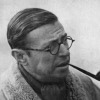
A student of Bertrand Russell, Ludwig Wittgenstein is sometimes referred to as the greatest philosopher of the twentieth century. He believed that the meanings of words reside in their ordinary uses and that philosophers often distort their meanings and end up playing ‘language games’.

Jean-Paul Sartre (1905-1980) French

Jean-Paul Sartre is probably the most famous existentialist and is known for the phrase “existence precedes essence“. Instead of starting with the idea of purpose and then humans existing because of that purpose, existentialists start with the existence of humans and emphasize that human’s must create their own meaning and purpose. Sartre’s lover, Simone de Beauvoir was also a famous philosopher and an important feminist. Being and Nothingness
21st CENTURY PHILOSOPHERS
PHILOSOPHY BRANCHES

Epistemology
Ontology
Ethics
Political Philosophy
Aesthetics
Logic
PHILOSOPHY THEMES

The Problem of Universals
Dialectics
UNDER CONSTRUCTION
Back to Top